Understanding Degenerative Disc Disease and Its Impact
Back and neck pain are among the most common health complaints today, especially as people age or lead sedentary lifestyles. One frequently misunderstood condition behind chronic spine pain is Degenerative Disc Disease (DDD).
Despite its name, degenerative disc disease is not actually a disease—it is a natural age-related process that can cause pain, stiffness, and reduced mobility when spinal discs lose their flexibility and strength. Understanding this condition is the first step toward effective management and long-term spine health.
What Is Degenerative Disc Disease?
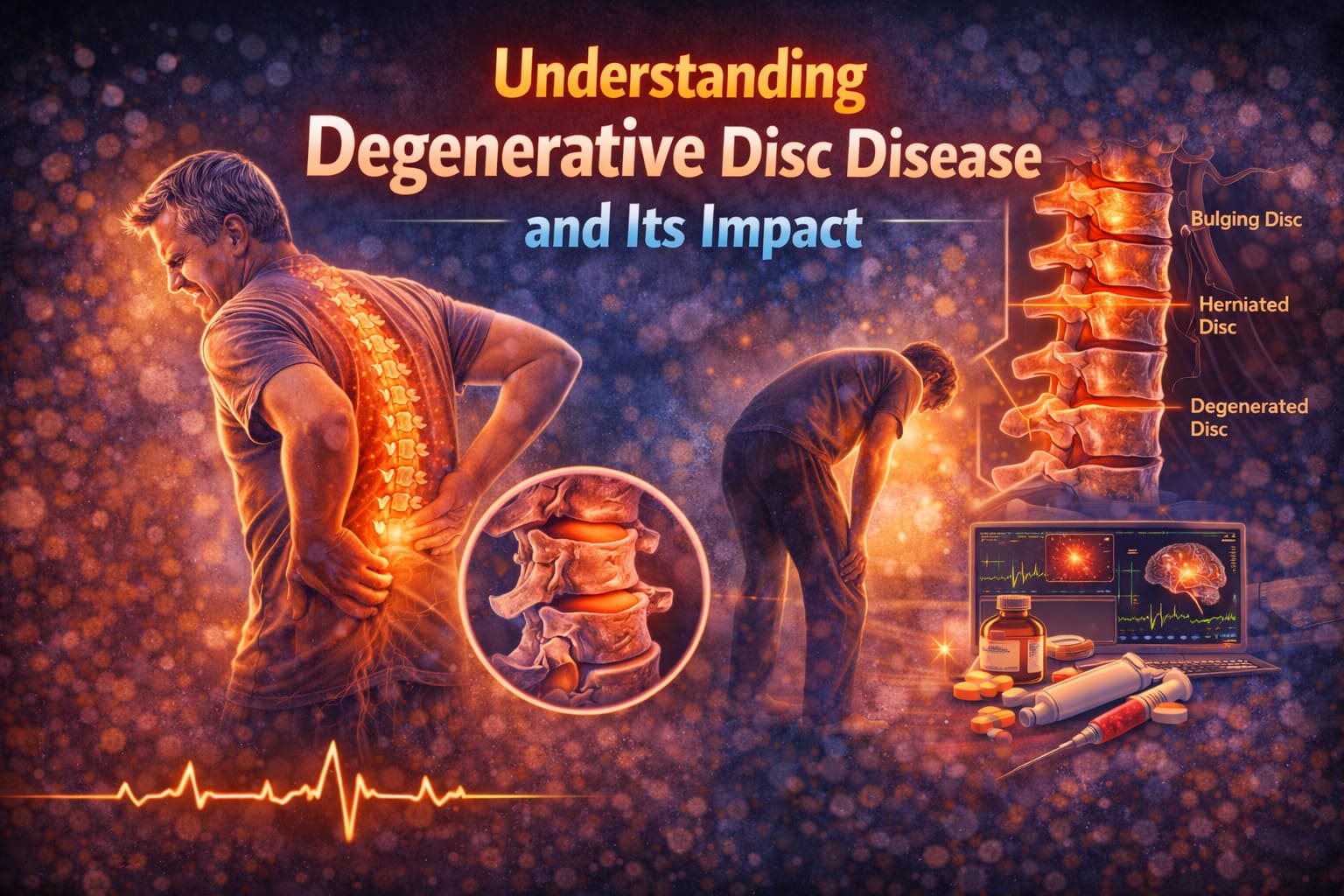
Degenerative disc disease occurs when the intervertebral discs, which act as cushions between the bones of the spine, gradually wear down over time.
Healthy vs. Degenerated Discs
- Healthy discs: Soft, flexible, and absorb shock
- Degenerated discs: Thinner, less elastic, and prone to irritation
As discs lose hydration and height, they provide less support, which can lead to pain and instability in the spine.
(Related read: How Your Posture Affects Your Spine Health)
Common Causes of Degenerative Disc Disease
Several factors contribute to disc degeneration:
- Aging and natural wear and tear
- Repetitive stress on the spine
- Poor posture and prolonged sitting
- Obesity, which increases spinal load
- Smoking, which reduces disc nutrition
- Previous spine injuries
Real-world example:
Office workers who sit for long hours with poor posture often experience early disc degeneration in the neck or lower back.
Symptoms of Degenerative Disc Disease
Symptoms vary depending on the location and severity of disc degeneration.
Common Signs Include:
- Chronic neck or lower back pain
- Pain that worsens with sitting, bending, or lifting
- Pain relief when lying down or changing positions
- Stiffness in the spine
- Radiating pain to arms or legs
In advanced cases, nerve compression may cause numbness, tingling, or muscle weakness.
(You may also like: Early Signs of Nerve Compression)
How Degenerative Disc Disease Impacts Daily Life
Degenerative disc disease can significantly affect daily activities and overall quality of life.
Physical Impact
- Difficulty standing or sitting for long periods
- Reduced flexibility and mobility
- Limited ability to exercise or work
Emotional and Lifestyle Impact
- Poor sleep due to pain
- Increased stress and anxiety
- Dependence on pain medications
Without proper management, symptoms may gradually worsen over time.
How Degenerative Disc Disease Is Diagnosed
Accurate diagnosis is essential for effective treatment.
Diagnostic Methods Include:
- Detailed medical history and physical examination
- X-rays to assess disc height
- MRI scans to evaluate disc and nerve health
- CT scans in selected cases
Early diagnosis allows for conservative treatment before symptoms become severe.
Treatment Options for Degenerative Disc Disease
Treatment focuses on pain relief, improving mobility, and preventing further degeneration.
1. Conservative (Non-Surgical) Treatments
Most patients respond well to non-surgical care.
Common options include:
- Physiotherapy and core strengthening exercises
- Posture correction and ergonomic changes
- Anti-inflammatory medications
- Lifestyle modifications such as weight control
(Learn more: Non-Surgical Treatments for Back Pain)
2. Pain Management Procedures
When conservative treatments are insufficient, targeted pain relief may help.
Options include:
- Epidural steroid injections
- Nerve blocks
- Facet joint injections
These procedures reduce inflammation and improve function.
3. Advanced Spine Treatments
Surgical intervention is considered only when:
- Pain persists despite treatment
- Nerve damage is progressing
- Daily activities are severely affected
Modern minimally invasive spine techniques can reduce recovery time and improve outcomes when surgery is necessary.
Can Degenerative Disc Disease Be Prevented?
While aging cannot be stopped, disc degeneration can be slowed.
Preventive Measures:
- Maintain good posture
- Exercise regularly to strengthen core muscles
- Avoid smoking
- Maintain a healthy body weight
- Use proper lifting techniques
Small daily habits can make a big difference in long-term spine health.
When Should You See a Spine Specialist?
Seek medical advice if you experience:
- Persistent back or neck pain
- Pain radiating to arms or legs
- Numbness or weakness
- Pain affecting sleep or daily life
Early expert evaluation can prevent complications and unnecessary surgery.
Final Thoughts
Degenerative disc disease is a common condition, but it does not have to control your life. With early diagnosis, proper treatment, and lifestyle modifications, most patients can manage symptoms effectively and maintain an active lifestyle.
For comprehensive evaluation and advanced spine care, consult Dr. Kalakoti Chandra Sekhar Reddy, a trusted expert in spine and neurological health.