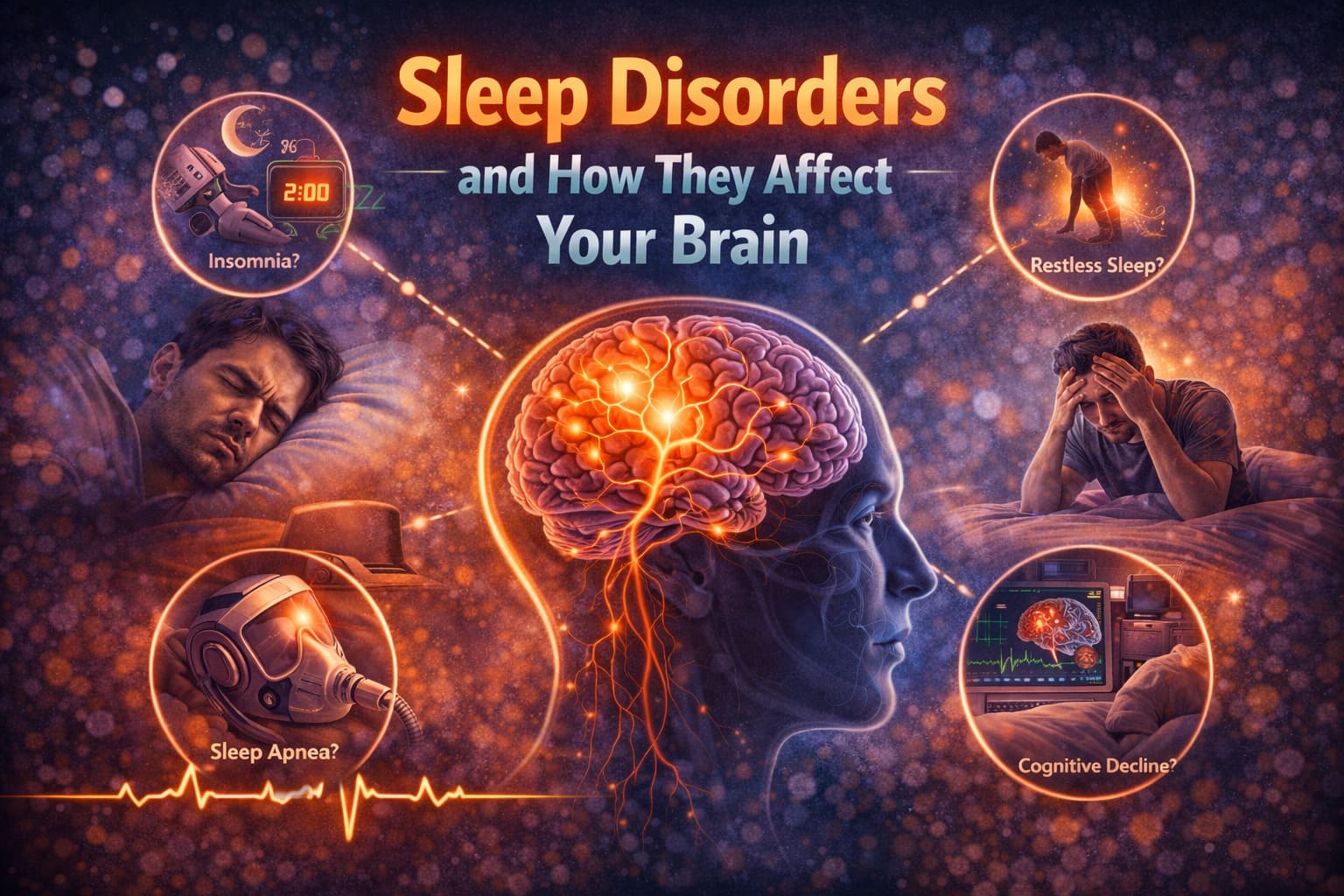
Sleep Disorders and How They Affect Your Brain
Sleep is essential for memory, mood, concentration and overall brain function. When sleep is disrupted—either in quality, duration or timing—it can lead to daytime drowsiness, reduced productivity and long-term neurological issues. Sleep disorders interfere with the body’s natural restorative processes and can impact both physical and mental health.
Common Types of Sleep Disorders
1. Insomnia
The most common sleep disorder.
It involves difficulty falling asleep, staying asleep, or waking up too early.
2. Sleep Apnea
A serious breathing disorder where a person stops breathing for 10 seconds or more during sleep.
It leads to low oxygen levels and frequent awakening, even if the person doesn’t realize it.
3. Restless Legs Syndrome (RLS)
A tingling, crawling or uncomfortable sensation in the legs—often with a strong urge to move them.
Symptoms worsen during rest or at night.
4. Hypersomnia
Excessive daytime sleepiness or inability to stay awake even after adequate nighttime sleep.
Narcolepsy, a condition with uncontrollable sleep episodes, falls under this category.
5. Circadian Rhythm Disorders
These affect the body’s internal clock, causing difficulty sleeping and waking at the right times.
Common in shift workers and people with irregular schedules.
6. Parasomnias
Unusual behaviors during sleep, such as:
- Sleepwalking
- Sleep talking
- Night terrors
- Eating during sleep
What Causes Sleep Disorders?
Sleep disorders can develop due to several factors, including:
- Physical conditions: ulcers, pain, chronic illness
- Psychiatric conditions: anxiety, depression, stress
- Medical issues: asthma, thyroid problems
- Environmental triggers: caffeine, alcohol, noise, irregular routines
- Genetics: narcolepsy often runs in families
- Medications: some drugs disrupt sleep patterns
- Shift work: working at night or rotating shifts affects the sleep-wake cycle
How Sleep Disorders Affect Your Brain
1. Brain Fog and Poor Concentration
Your brain needs deep sleep to store memories and clear toxins. Without this:
- Thinking feels slow
- Concentration becomes difficult
- Words are harder to recall
- Productivity drops
- Complex tasks feel overwhelming
Sleep deprivation directly impacts the brain’s cognitive processing speed.
2. Mood Changes
Insufficient sleep is linked to:
- Irritability
- Anxiety
- Depression
- Increased anger and frustration
This happens because lack of sleep makes the amygdala (the brain’s emotional control center) more reactive, while the prefrontal cortex struggles to regulate emotions.
3. Behavioral Changes
Sleep-deprived individuals may show:
- Impulsivity
- Hyperactivity
- Emotional outbursts
- Social withdrawal
- Difficulty communicating
The brain struggles to maintain self-control and emotional balance.
4. Increased Stress Levels
Poor sleep makes it harder to cope with daily challenges.
Even small inconveniences feel overwhelming because:
- Stress hormones rise
- Emotional tolerance decreases
- Decision-making becomes harder
Long-term sleep issues can lead to burnout, anxiety disorders and poor mental health.
When to See a Neurologist
You should consult a neurologist if you experience:
- Persistent insomnia
- Loud snoring with choking or gasping
- Extreme daytime sleepiness
- Sudden loss of muscle tone (cataplexy)
- Restless or jerking legs at night
- sleepwalking or unusual night behaviors
- Memory issues related to poor sleep
Consult Dr. Kalakoti Chandra Sekhar Reddy — Best Neurologist in Eluru
If you struggle with chronic sleep problems, early evaluation can help restore healthy sleep patterns and protect long-term brain function.
Dr. Kalakoti Chandra Sekhar Reddy provides advanced diagnosis and tailored treatments for all types of sleep disorders and neurological conditions.