Hydrocephalus in Children – Symptoms, Causes & Treatment by Dr. Kalakoti Chandrasekhar Reddy
Hydrocephalus in children is a serious medical condition that affects the brain. It is a result of the abnormal accumulation of cerebrospinal fluid in the ventricles of the brain. We understand that cerebrospinal fluid is essential in the protection of the brain and spinal cord, the supply of nutrients to the brain, and the removal of waste products. However, when cerebrospinal fluid does not flow or drain from the brain, it results in high pressure in the brain that affects the development of the brain.
In children, the condition can be serious because the brain is still developing. Therefore, if hydrocephalus is not treated, it can affect the development of the child.
What Causes Hydrocephalus in Children?
Hydrocephalus can either be congenital or acquired. It is important to note that understanding the cause of hydrocephalus can help in finding an effective treatment for the condition.
1. Congenital Hydrocephalus
Congenital hydrocephalus can be caused by the following:
- Genetic disorders
- Neural tube defects, such as spina bifida
- Aqueductal stenosis, which is a condition where a narrow passage prevents the flow of cerebrospinal fluid
Brain malformations during fetal development
2. Acquired Hydrocephalus
Acquired hydrocephalus can occur as a result of:
- Premature birth and intraventricular hemorrhage
- Infections of the brain, like meningitis
- Brain tumors that obstruct the flow of CSF
- Traumatic brain injuries
- Post-operative complications of brain surgery
By understanding the causes, we can keep a closer eye on those infants and children at risk.
Kinds of Hydrocephalus in Children
Communicating Hydrocephalus
In this condition, there is free passage of CSF between the ventricles but there is poor absorption of CSF into the bloodstream. The issue is with the absorption and not with obstruction.
Non-Communicating (Obstructive) Hydrocephalus
This is due to an obstruction that prevents the passage of fluid between the ventricles. This is one of the most prevalent types of hydrocephalus in infants and toddlers.
Normal Pressure Hydrocephalus in Rare Pediatric Cases
While this is more prevalent in adults, there are instances in pediatric patients where there are changes in pressure that are similar to normal pressure hydrocephalus.
Early Symptoms of Hydrocephalus in Babies
Early detection of symptoms is critical. Babies cannot express pain through words, and thus, the only important signs are physical.
Rapid Growth of the Head
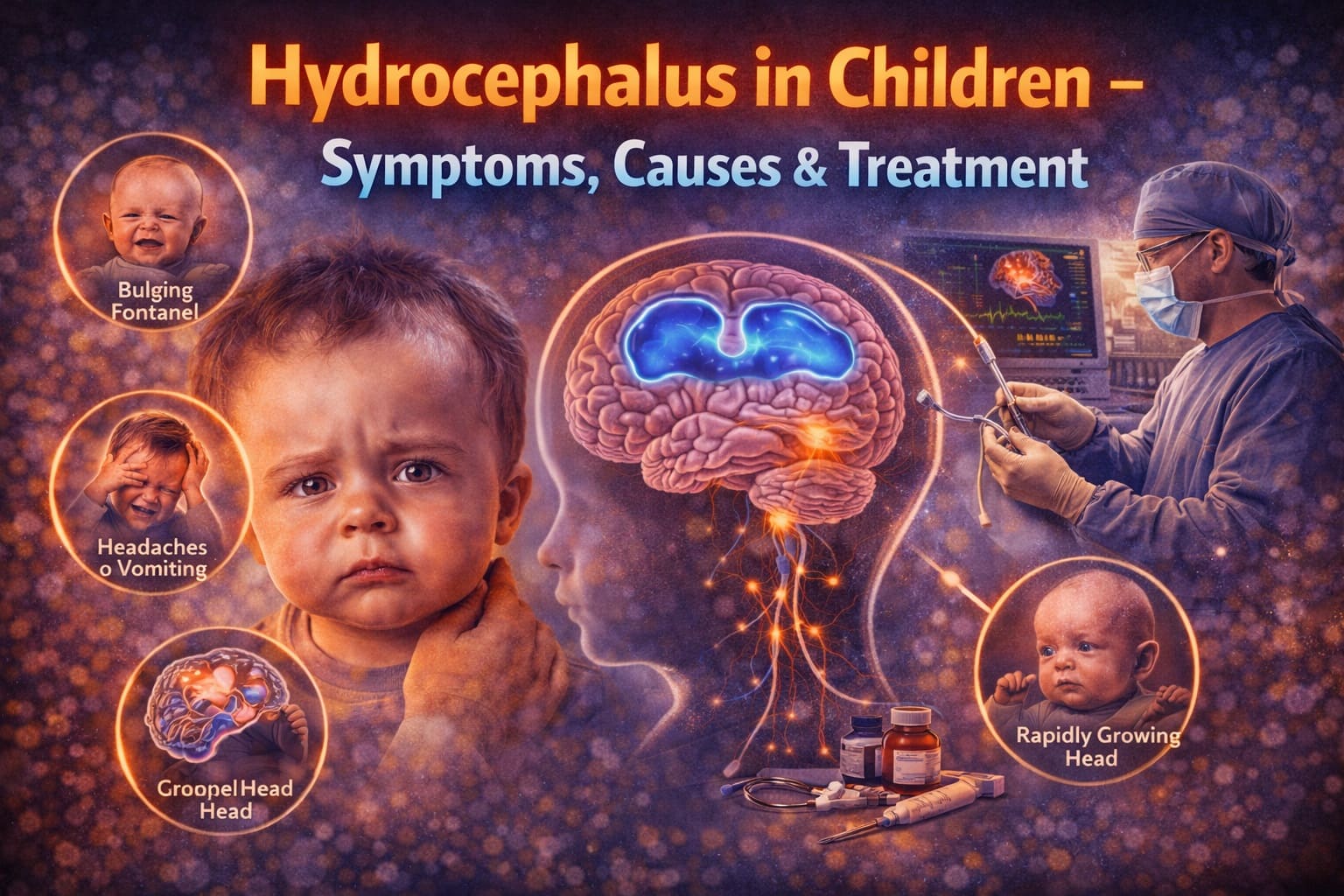
The most visible symptom is the rapid growth of the head. Pediatricians are required to measure the head circumference of babies on a regular basis for this purpose. A rapidly growing head can be an indication of fluid accumulation.
Swelling of the Fontanelle
The soft spot on the top of the baby’s head can look swollen or hard. This is usually the first visible symptom of increased intracranial pressure.
Sunset Eye Sign
Babies can show signs of downward deviation of the eyes, where the white part above the iris is visible. This is referred to as the “sunsetting” sign and needs urgent medical attention.
Vomiting and Poor Feeding Habits
Increased intracranial pressure can cause vomiting and irritability. Babies can refuse to feed or be extremely cranky.
Seizures
Seizures in babies are always a medical emergency and can be a symptom of advanced hydrocephalus.
Symptoms of Hydrocephalus in Toddlers and Older Children
As children age, symptoms change from physical head enlargement to neurological and developmental issues.
Chronic Headaches
Older children may experience persistent morning headaches. Headaches may worsen when lying down due to pressure.
Blurred or Double Vision
Pressure from the fluid on the optic nerve can cause vision problems.
Balance and Coordination Issues
Children may seem clumsy or have trouble walking in a straight line. Fine motor skills may also be impacted.
Learning Issues and Behavioral Issues
Sudden learning issues in school, trouble concentrating, or changes in personality can be a sign of underlying stress from neurological issues.
Delayed Development
Children with undiagnosed hydrocephalus may have delayed speech, motor skills, or cognitive development.
According to the NHS (National Health Service), symptoms of hydrocephalus vary depending on age and may include rapid head enlargement in infants and persistent headaches in older children
How Hydrocephalus Is Diagnosed
Advanced imaging and clinical diagnosis are necessary for accurate diagnosis.
Cranial Ultrasound
In infants with open fontanelles, ultrasound imaging is a safe and non-invasive method of diagnosis.
CT Scan
A computed tomography scan is a quick method of imaging and is commonly used in emergency situations to diagnose enlarged ventricles.
MRI Scan
Magnetic Resonance Imaging is a detailed method of viewing the structure of the brain and can be used to diagnose obstructions, tumors, or abnormalities.
Information provided by MedlinePlus highlights that imaging tests such as MRI and CT scans are essential in confirming hydrocephalus
Treatment Methods for Hydrocephalus in Children
The goal of treatment is to alleviate pressure and allow normal fluid circulation.
Ventriculoperitoneal (VP) Shunt Surgery
The primary treatment method is VP shunt surgery. Surgeons implant a VP shunt by inserting a soft plastic tube from the brain ventricles to redirect excess fluid from the brain to the abdominal area, where it can be absorbed.
The VP shunt consists of:
- A tube inserted in the ventricle
- A pressure-regulating valve
- Fluid-conducting tubing that leads to the abdomen
Although successful, shunts must be closely monitored because they can sometimes fail or become infected.
Endoscopic Third Ventriculostomy (ETV)
In some cases, ETV is performed by surgeons to create a bypass for CSF drainage. This bypasses the need for a permanent shunt in some children.
Combined ETV with Choroid Plexus Cauterization
In some infants, ETV and choroid plexus cauterization can be combined to decrease fluid production.
For advanced surgical management such as VP shunt or ETV procedure, it is important to consult the best neuro surgeon in Eluru who has expertise in pediatric brain surgery
Complications of Untreated Hydrocephalus
If hydrocephalus is left untreated, it can result in the following complications:
- Brain damage
- Intellectual impairment
- Blindness
- Seizure disorders
- Developmental delays
- Life-threatening intracranial pressure
These complications can be prevented by seeking early treatment.
Long-Term Prognosis and Quality of Life
If diagnosed early and surgically treated properly, children with hydrocephalus can lead healthy and productive lives. We would like to emphasize that early treatment can greatly impact neurological development.
Regular follow-ups are necessary to check the function of the shunt and the developmental status of the child. Multidisciplinary care by neurologists, neurosurgeons, pediatricians, therapists, and educators provides comprehensive care.
Monitoring for Shunt Malfunction
Parents need to be alert for signs of shunt-related complications, such as:
- Sudden headaches
- Vomiting
- Lethargy
- Redness of the tract where the shunt is placed
- Return of original symptoms
Parents should seek immediate medical attention if their child shows any of these symptoms.
Preventive Measures and Risk Reduction
Although not all instances of hydrocephalus can be prevented, we can work to minimize risks by:
- Providing adequate prenatal care
- Controlling maternal infections
- Preventing complications from premature birth
- Vaccinating against meningitis
- Taking steps to prevent head injuries
Preventive care and education make a huge difference in the neurological development of children.
Why Early Detection of Hydrocephalus Matters
Childhood is a time of rapid and intricate brain development. Even slight changes in intracranial pressure can affect learning, behavior, and physical development. Early detection of hydrocephalus in children gives parents and caregivers the power to take immediate action.
We should never dismiss any unusual signs of neurological problems in children. Enlargement of the head, headaches, vomiting, or regression in development should never be ignored
Why Choose Dr. Kalakoti Chandrasekhar Reddy for Pediatric Hydrocephalus Treatment
When it comes to treating hydrocephalus in children, experience and precision matter more than anything else. The brain is delicate, especially in infants and growing children. That is why choosing the right neurosurgeon is one of the most important decisions a parent can make.
Dr. Kalakoti Chandrasekhar Reddy is known for his expertise in advanced neurosurgical procedures, including VP shunt surgery, Endoscopic Third Ventriculostomy (ETV), and complex pediatric brain conditions. His approach combines medical excellence with compassionate care—something every parent looks for during stressful times.
What truly sets him apart?
- Extensive Experience in Pediatric Neurosurgery – Specialized care tailored specifically for children’s neurological conditions.
- Advanced Surgical Techniques – Expertise in minimally invasive procedures that reduce recovery time and complications.
- Comprehensive Evaluation & Accurate Diagnosis – Detailed assessments using modern imaging and evidence-based protocols.
- Personalized Treatment Plans – Every child is different. Treatment strategies are customized for the best long-term outcomes.
- Strong Post-Surgical Follow-Up Care – Continuous monitoring ensures shunt functionality and healthy development.
- Patient-Centered Communication – Parents are guided clearly at every step, with transparency and reassurance.
Hydrocephalus requires timely intervention and careful long-term management. Under the guidance of Dr. Kalakoti Chandrasekhar Reddy, families receive not just treatment, but a complete support system focused on safety, recovery, and a brighter future for their child.
If you are searching for the best neuro surgeon in Eluru, Dr. Kalakoti Chandrasekhar Reddy offers advanced neurosurgical expertise in treating hydrocephalus in children.