Advanced Neuroendoscopy Techniques for Brain Tumour
Brain tumours require highly precise and delicate treatment approaches. Over the years, advancements in neurosurgery have significantly improved patient outcomes, and neuroendoscopy stands out as one of the most important innovations in modern brain tumour management.
Advanced neuroendoscopy techniques allow surgeons to access deep-seated brain tumours through small openings, minimizing damage to surrounding healthy tissue. In this article, we explain what neuroendoscopy is, how it helps in brain tumour treatment, and why it is changing the future of neurosurgery.
What Is Neuroendoscopy?
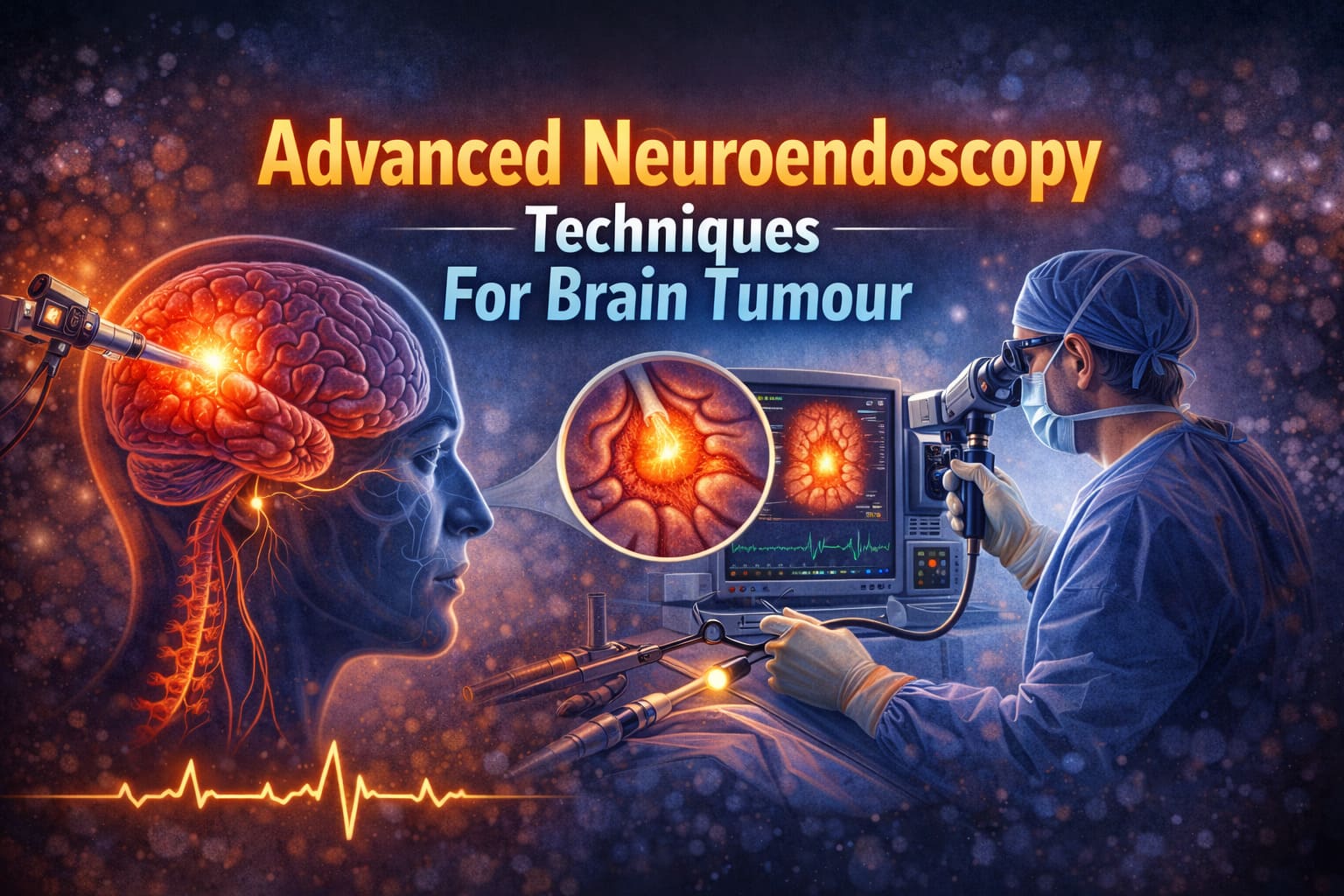
Neuroendoscopy is a minimally invasive neurosurgical technique that uses a thin, flexible tube called an endoscope, equipped with a high-definition camera and light source. This allows surgeons to visualize the brain in real time and perform precise procedures through small incisions or natural openings.
Key Advantages of Neuroendoscopy
- Smaller surgical openings
- Better visualization of critical brain structures
- Reduced trauma to healthy tissue
- Faster recovery and shorter hospital stay
(Related read: Understanding Brain Tumours: Types, Symptoms, and Treatment Options)
Why Advanced Neuroendoscopy Is Important for Brain Tumours
Traditional open brain surgery often requires large openings and extensive tissue manipulation. Advanced neuroendoscopy techniques reduce these risks while improving surgical accuracy.
Benefits for Brain Tumour Patients
- Minimally invasive tumour access
- Lower risk of complications
- Reduced blood loss
- Less post-operative pain
- Improved cosmetic outcomes
These benefits are especially important when dealing with tumours located deep within the brain or near vital structures.
Advanced Neuroendoscopy Techniques Used in Brain Tumour Surgery
1. Endoscopic Endonasal Approach
This technique allows surgeons to reach tumours at the base of the brain through the nasal passage, avoiding external incisions.
Commonly used for:
- Pituitary tumours
- Skull base tumours
- Craniopharyngiomas
Advantages:
- No visible scars
- Direct access to tumour
- Faster recovery
(You may also like: Pituitary Tumours: Symptoms and Treatment Options)
2. Intraventricular Neuroendoscopy
This approach is used to treat tumours located within the ventricles of the brain, which are fluid-filled spaces.
Key benefits:
- Direct visualization of ventricular tumours
- Simultaneous treatment of hydrocephalus
- Reduced need for shunt placement
This technique is particularly useful in pediatric and adult patients with obstructive brain tumours.
3. Endoscopic-Assisted Microsurgery
In this method, the endoscope is used alongside traditional microsurgical tools to enhance visibility in hard-to-reach areas.
Why it matters:
- Improves tumour resection accuracy
- Reduces blind spots during surgery
- Preserves critical nerves and blood vessels
4. Endoscopic Biopsy Techniques
For certain brain tumours, a biopsy is required before planning definitive treatment.
Advantages of endoscopic biopsy:
- Accurate tissue diagnosis
- Minimal tissue disruption
- Faster recovery compared to open biopsy
Real-World Example: Deep-Seated Brain Tumours
Patients with tumours located near the brainstem or ventricles were once considered high-risk surgical candidates. With advanced neuroendoscopy, surgeons can now safely access these areas using small corridors, significantly improving outcomes and reducing complications.
Who Is a Candidate for Neuroendoscopic Brain Tumour Surgery?
Not all brain tumours require neuroendoscopy, but it is highly effective for:
- Pituitary and skull base tumours
- Intraventricular tumours
- Cystic brain tumours
- Tumours causing hydrocephalus
- Select pediatric brain tumours
A detailed evaluation by a skilled neurosurgeon is essential to determine the best surgical approach.
Risks and Limitations
While neuroendoscopy offers many benefits, it also has limitations:
- Not suitable for very large or highly vascular tumours
- Requires specialized expertise and equipment
- Careful patient selection is critical
When performed by an experienced neurosurgeon, complications are significantly minimized.
Role of Expertise in Advanced Neuroendoscopy
Advanced neuroendoscopy demands extensive training, precision, and experience. The surgeon’s expertise plays a crucial role in:
- Selecting the right surgical approach
- Maximizing tumour removal
- Preserving neurological function
Choosing a specialist with experience in advanced neuroendoscopic procedures greatly influences long-term outcomes.
When Should You Consult a Neurosurgeon?
Seek immediate medical attention if you experience:
- Persistent headaches
- Seizures
- Vision problems
- Hormonal disturbances
- Weakness or balance issues
Early diagnosis and timely treatment can be life-changing.
Final Thoughts
Advanced neuroendoscopy techniques have revolutionized brain tumour surgery by offering safer, minimally invasive, and highly effective treatment options. With improved visualization and precision, patients can experience better outcomes and faster recovery.
For expert evaluation and advanced neuroendoscopic brain tumour treatment, consult Dr. Kalakoti Chandra Sekhar Reddy, a trusted specialist in modern neurosurgical care.